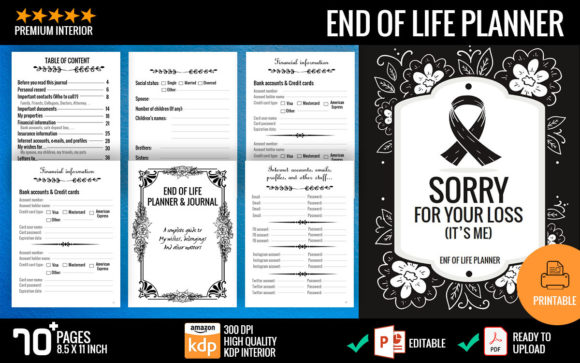
End of Life Planner: Organizing Vital Information and Last Wishes for Your Loved Ones
Facing mortality is one of the most difficult aspects of the human experience, yet preparing for it is one of the most profound acts of love you can offer. An End of Life Planner serves as a comprehensive bridge between your life and the legacy you leave behind. It is far more than a simple checklist or a storage folder for passwords; it is a holistic tool designed to consolidate vital information, express deep emotions, and provide clear guidance when your loved ones are navigating grief. By centralizing personal records, financial details, and sentimental messages in one accessible location, you transform potential chaos into clarity during a time of immense emotional vulnerability.
The Emotional and Logistical Burden on Survivors
When a loved one passes away without a centralized plan, surviving family members often face a "second grief" born of administrative overwhelm. In the immediate aftermath of loss, executors and next-of-kin must locate bank accounts, identify insurance policies, contact attorneys, and manage digital assets, all while processing their sorrow. This scavenger hunt for information can lead to missed bill payments, unclaimed benefits, and family disputes over unclear intentions.
The primary goal of an End of Life Planner is to alleviate this burden. It addresses the critical need for organization by ensuring that everything those left behind need to know and do is readily available. Beyond logistics, there is also an emotional necessity. Many individuals carry unspoken apologies, final words of encouragement, or specific funeral preferences that they fear will be lost. A dedicated planner provides a structured space for these expressions, ensuring that your voice remains present even after you are gone.
Comprehensive Organization of Vital Records and Assets
A complete End of Life Planner functions as a master index for your entire existence. Rather than forcing loved ones to guess where documents might be hidden, this resource categorizes essential information systematically. Key sections typically include:
- Personal Records and Important Contacts: A curated list of attorneys, financial advisors, doctors, and close friends ensures that the right people are notified and consulted immediately.
- Financial and Insurance Information: Detailed logs of bank accounts, retirement funds, credit cards, and life insurance policies prevent assets from going unclaimed and help settle estates efficiently.
- Property and Asset Inventory: Documentation regarding real estate, vehicles, and valuable personal property helps executors distribute assets according to your wishes.
- Digital Legacy Management: In the modern era, access to email accounts, social media profiles, and cloud storage is crucial. Providing secure login credentials and instructions for memorializing or deleting accounts protects your digital identity.
- Document Location Guide: Simply listing an account number is insufficient; specifying exactly where the physical deed, policy binder, or birth certificate is stored saves hours of frantic searching.
By consolidating these elements, the planner acts as a single source of truth, reducing the risk of errors and ensuring that legal and financial obligations are met promptly.
Expressing Last Wishes, Apologies, and Personal Messages
While logistical organization is the backbone of an End of Life Planner, its heart lies in the opportunity for personal expression. Standard legal documents like wills rarely allow for emotional nuance. This planner fills that gap with dedicated sections for letters and reflections.
Letters to Loved Ones: Writing individual letters to spouses, children, or friends allows you to share specific memories, express pride, or offer comfort tailored to each relationship. These letters often become cherished heirlooms that provide solace long after practical matters are settled.
My Apologies and Last Words: Unresolved conflicts can haunt survivors. A designated space for apologies offers a chance to seek forgiveness or extend grace, potentially facilitating healing among those left behind. Similarly, recording your last words provides a final message of love and reassurance that can anchor grieving family members.
Funeral Recommendations: Ambiguity regarding burial, cremation, or service preferences is a common source of stress. Clearly outlining your recommendations—from music selections to venue choices—ensures your farewell reflects your personality and relieves decision-making fatigue for your family.
Flexibility and Accessibility Through Editable Formats
Every individual’s life is unique, and a rigid template cannot accommodate everyone’s needs. High-quality End of Life Planners prioritize flexibility through editable formats. Access to a 100% editable PPT file alongside print-ready PDFs empowers users to customize the document extensively. Whether you need to add extra pages for complex investment portfolios or remove sections that do not apply to your situation, the ability to modify the content ensures the planner remains relevant.
This adaptability is particularly important for different user approaches:
- The Minimalist: May prefer to streamline the 70-page base document, focusing only on essential contacts and digital access.
- The Detailed Planner: Can utilize the editable source files to expand sections on property or add extensive notes about family history and genealogy.
- The Digital Native: Might use the JPG or PDF files to create a secure digital version stored in an encrypted cloud vault, while printing a physical copy for safekeeping.
Furthermore, technical specifications matter. A standard 8.5 x 11-inch size with high-resolution interiors and no-bleed formatting ensures that whether you print at home or upload to a Print-on-Demand (POD) platform, the result is professional and legible. The inclusion of multiple file sources (PDF, PPT, JPG) guarantees compatibility across different devices and software, making the planning process accessible regardless of technical proficiency.
Practical Implementation and Best Practices
Creating an End of Life Planner is not a one-time event but an ongoing practice. To maximize its effectiveness, consider the following implementation strategies:
- Start Small and Build: Do not feel pressured to complete every section in one sitting. Begin with critical financial information and contacts, then gradually add personal letters and detailed asset lists over weeks or months.
- Update Regularly: Life changes rapidly. Set a recurring reminder, perhaps annually or after major life events like marriage, divorce, or purchasing a home, to review and update your planner.
- Communicate Its Existence: A planner is useless if no one knows it exists. Inform your executor or a trusted family member where the physical and digital copies are stored. You do not need to share the contents prematurely, but they must know how to access it when the time comes.
- Balance Security and Accessibility: While organizing sensitive data, ensure you are not creating a security risk. Consider using a password manager for digital credentials and referencing it in the planner, rather than writing raw passwords directly on paper if the physical book will be stored in an insecure location.
- Use It as a Conversation Starter: Sharing portions of the planner with adult children or partners can open healthy dialogues about aging, values, and expectations, reducing anxiety around end-of-life topics.
A Final Gift of Clarity and Comfort
Ultimately, an End of Life Planner is a tangible manifestation of care. It acknowledges the reality of death while honoring the complexity of a life lived. By meticulously organizing accounts, documents, and properties, you protect your loved ones from bureaucratic nightmares. By articulating last wishes, apologies, and recommendations, you preserve your relational legacy. The combination of practical utility and emotional depth, supported by flexible and high-quality editable formats, makes this tool indispensable for responsible estate planning. Investing time in completing such a planner ensures that when you are gone, what remains for your family is not confusion or regret, but a clear path forward and the enduring warmth of your prepared words.