Project Planner KDP Interior Template: A Practical Guide for Publishers
The self-publishing landscape has evolved significantly, moving beyond simple journals and lined notebooks into highly functional, niche-specific tools. For creators looking to establish authority in the productivity or business management categories on Amazon, the Project Planner KDP Interior Template represents a strategic asset. Rather than spending weeks designing layouts from scratch, this template provides a professional foundation that balances aesthetic appeal with practical utility. Understanding the specific characteristics of this interior is essential for publishers who want to deliver genuine value to their customers while maintaining an efficient production workflow.
Understanding the Core Specifications
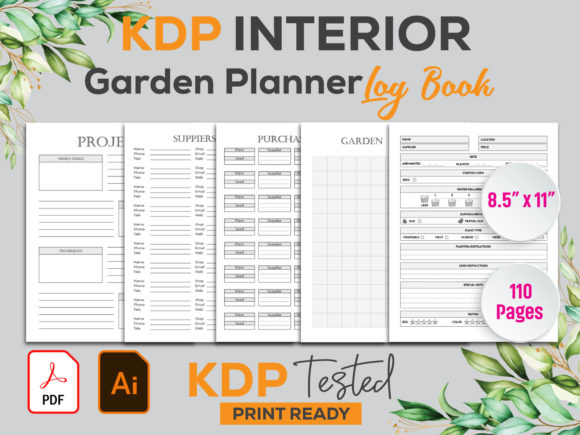
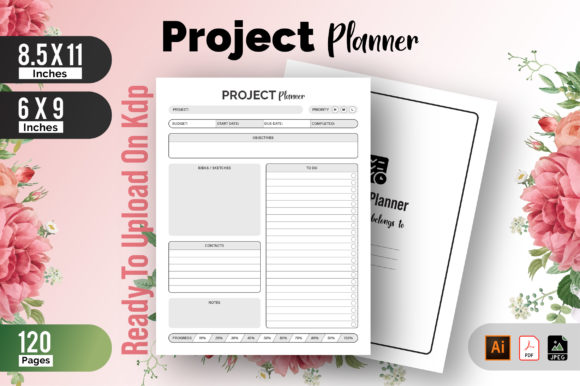
Before integrating any template into a publishing strategy, it is vital to understand the technical parameters that define its usability. This specific Project Planner KDP Interior Template is engineered with precise specifications that cater to both portability and comprehensive planning needs. The availability of two distinct dimensions—8.5″ x 11″ and 6″ x 9″—allows publishers to target different user behaviors. The larger format serves as a desk companion for detailed project mapping, while the smaller trim size appeals to professionals who require a mobile solution for on-site management or travel.
The interior consists of 120 pages, a length that hits a sweet spot for low-content and medium-content books. It is substantial enough to cover multiple projects or several months of planning without becoming so thick that it intimidates the user or drives up printing costs excessively. Crucially, this template is designed with no bleed. For many KDP creators, bleed settings are a common source of rejection or formatting errors during the upload process. A no-bleed design ensures that all critical content remains safely within the margins, significantly reducing the risk of printing mishaps and making the file inherently safer for those new to KDP formatting.
The Value of Editable Source Files
One of the most significant advantages of this template is the inclusion of editable source files alongside the print-ready PDF. While a pre-made PDF allows for immediate uploading, the ability to modify the design transforms this product from a static commodity into a flexible branding tool. Publishers can adjust headers, add logos, modify prompts, or tailor the layout to specific industries such as construction, software development, or event planning.
This customization capability addresses a primary concern in the KDP marketplace: differentiation. By utilizing the included AI (Adobe Illustrator) or editable PDF files, creators can ensure their planner does not look identical to competitors using the same base assets. The inclusion of JPEG files further extends utility, allowing designers to preview pages or create marketing mockups without needing specialized vector software immediately. This multi-format approach supports a more dynamic publishing business model where one base template can spawn multiple niche variations.
Practical Applications and Target Audiences
A successful KDP book solves a specific problem. The Project Planner KDP Interior Template is versatile, but it performs best when positioned correctly for distinct audiences. Understanding who benefits from this layout helps in crafting better metadata, descriptions, and ad targeting.
- Freelancers and Solopreneurs: Individuals managing multiple client deliverables often struggle with digital fatigue. A physical planner based on this template offers a tactile way to track milestones, deadlines, and resource allocation without screen distractions.
- Small Business Owners: For entrepreneurs overseeing operations, inventory, or team tasks, the structured pages provide a centralized location for daily execution strategies that complement digital tools like Trello or Asana rather than replacing them.
- Creative Professionals: Writers, artists, and designers often need non-linear planning spaces. If the template includes sections for brainstorming or sketching alongside standard tracking fields, it becomes invaluable for creative project management.
- Students and Academics: Graduate students managing thesis work or complex research projects benefit from the 120-page structure to break down multi-year goals into actionable weekly tasks.
When evaluating this template for your catalog, consider how the internal structure aligns with these workflows. Does it include space for budget tracking? Is there a section for stakeholder communication logs? The more closely the interior matches the mental model of the target user, the higher the likelihood of positive reviews and repeat customers.
Evaluating Print Quality and User Experience
The end-user experience is paramount in low-content publishing. A planner might look beautiful on a screen, but it must function perfectly in print. This template is described as KDP tested and high-quality print-ready, which implies that line weights, font sizes, and grayscale values have been optimized for Amazon’s printing technology. Dark, saturated backgrounds often print poorly on standard KDP paper, leading to bleeding or muddiness. A well-designed project planner typically utilizes clean lines and ample white space to ensure readability and write-ability.
Publishers should always order a proof copy before launching. Even with a tested template, variations in paper stock or personal modifications can affect the final output. Verify that the writing area is sufficient for users with larger handwriting and that the binding gutter does not obscure critical planning fields. The "Intro Page Included" feature mentioned in the specifications is a subtle but important UX element; it helps orient the user immediately and adds a layer of professionalism that separates premium planners from generic notebooks.
Strategic Considerations for Publishers
While the Project Planner KDP Interior Template offers a robust starting point, success requires more than just uploading a file. Publishers must navigate the balance between convenience and originality. Because templates are accessible to many, relying solely on the default design can lead to market saturation. Use the editable features to inject unique value. Perhaps add a proprietary methodology page at the beginning, or customize the monthly review sections to reflect current industry trends.
Additionally, consider the seasonal nature of project planning. Unlike dated journals, undated project planners like this one offer evergreen potential. However, marketing efforts should still align with peak planning seasons, such as the start of the fiscal year, back-to-school periods, or January resolutions. The flexibility of an undated 120-page format means inventory never truly expires, providing long-term passive income potential if the listing is optimized correctly.
Limitations and Realistic Expectations
It is important to maintain realistic expectations regarding what a template can achieve. This interior provides the structure for organization, but it does not guarantee sales. The KDP marketplace is competitive, and quality interiors are now the baseline expectation, not a differentiator. Publishers must pair this high-quality interior with equally high-quality cover design and keyword research.
Furthermore, be mindful of licensing terms associated with any purchased template. Ensure you have the rights to use the interior for commercial distribution on KDP. While the features list indicates readiness for upload, verifying the license protects your account from potential intellectual property issues. Always treat the template as a raw material to be refined rather than a finished product to be resold as-is.
Making the Final Decision
Selecting the right interior is a foundational decision in the self-publishing process. The Project Planner KDP Interior Template stands out due to its dual-size options, no-bleed safety, and comprehensive source file inclusion. These features reduce technical friction and allow for significant creative freedom. For publishers focused on the productivity niche, it offers a reliable framework that respects both the creator's time and the end-user's need for functional organization.
Ultimately, the value of this template lies in its adaptability. Whether you are creating a specialized planner for real estate agents, a generic goal tracker for personal development, or a technical logbook for engineers, the underlying architecture supports diverse applications. By leveraging the editable assets and adhering to best practices in KDP formatting, creators can build a sustainable portfolio of high-utility books that serve real-world needs. Downloading and utilizing this resource is not just about acquiring a file; it is about adopting a streamlined workflow that prioritizes quality and user satisfaction in the competitive world of self-publishing.