Doctor Visits Logbook KDP Interior: A Practical Resource for Publishers and Personal Health Tracking
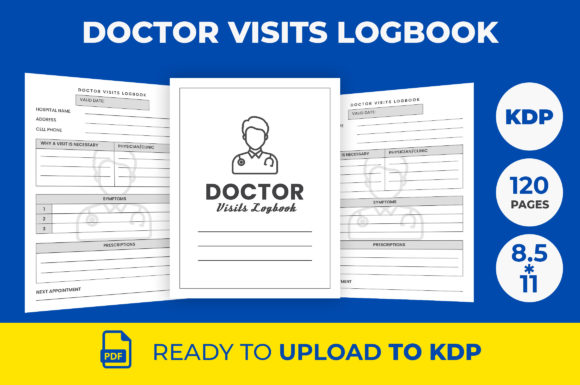
Creating a successful low-content or medium-content book on Amazon KDP often comes down to solving a specific problem for a specific audience. The Doctor Visits Logbook KDP Interior is designed to address the growing need for organized personal health records. Unlike generic notebooks, this interior provides structured prompts and layouts specifically tailored for tracking medical appointments, symptoms, medications, and physician notes. For self-publishers, it represents a ready-to-use asset that eliminates the design phase, while for end-users, it serves as a vital tool for managing complex healthcare journeys.
Why Structured Health Logging Matters in Real Life
People rarely search for a doctor visit tracker because they are bored; they search because they are overwhelmed. Managing health information is cognitively demanding, especially when dealing with chronic conditions, post-operative care, or pediatric medicine. A blank notebook often fails because patients forget what to record during stressful appointments. This logbook solves that friction by providing pre-formatted fields.
For KDP creators, understanding this "why" is essential for marketing and positioning. You aren't just selling paper; you are selling peace of mind and better communication with healthcare providers. When a patient brings a concise, organized history of their symptoms to an appointment, doctors can make faster, more accurate decisions. This tangible benefit is what drives sales and positive reviews for books utilizing this type of specialized interior.
Caregivers Managing Complex Medical Histories
One of the most significant user demographics for this logbook is adult children caring for aging parents. These caregivers often juggle multiple specialists, changing medication schedules, and insurance paperwork. They need a centralized place to record blood pressure readings, note side effects from new prescriptions, and track questions for the next cardiologist or neurologist visit.
In this scenario, the 8.5×11 trim size is particularly advantageous. Caregivers often need ample space to write detailed observations or tape in lab results and business cards. The larger format accommodates the volume of data generated by geriatric care without feeling cramped. For publishers, targeting keywords related to "elderly care," "caregiver organization," and "medical binder" aligns perfectly with this high-intent audience.
Chronic Illness and Symptom Tracking
Individuals managing autoimmune diseases, diabetes, or migraines require longitudinal data tracking. Patterns in symptoms often emerge over weeks or months, not days. A dedicated logbook allows users to correlate lifestyle factors with flare-ups. Because this interior includes 120 pages, it offers enough capacity for several months of daily or weekly tracking, making it a substantial resource rather than a disposable notepad.
From a publishing perspective, this use case highlights the importance of the "No Bleed" specification. Users tracking sensitive health data often prefer writing near the margins without fear of text being trimmed off. Ensuring your interior respects safe zones builds trust with customers who rely on every millimeter of page space for their records.
Pediatric Health and Developmental Monitoring
Parents of children with special needs or frequent medical issues face unique documentation challenges. They must track developmental milestones, vaccination schedules, therapy sessions, and school nurse visits alongside standard pediatric checkups. The editable nature of this product becomes crucial here. A parent might want to add a specific section for speech therapy goals or dietary restrictions that isn't present in a standard template.
Because the source file is an Editable Illustrator EPS, publishers can customize the interior to create niche variations. You could adapt the base Doctor Visits Logbook KDP Interior into a "Therapy Session Tracker" or a "Pediatric Milestone Journal" with minimal effort. This flexibility allows you to serve micro-niches that generic competitors miss, increasing your catalog's relevance and potential profitability.
Leveraging the Technical Specifications for Quality
Technical quality directly impacts customer satisfaction and return rates in the KDP ecosystem. This product package includes tested PDF files and high-resolution interiors, which mitigates common publishing headaches. Blurry text or misaligned margins are primary reasons for negative feedback on low-content books. By using pre-tested assets, you ensure that the final printed product looks professional and functions as intended.
The inclusion of an Editable Source File in Illustrator EPS format transforms this from a static product into a dynamic business asset. Perhaps you want to change the font to improve readability for seniors, adjust the header to include a branding element, or translate the prompts into Spanish for a bilingual market. Having access to the vector source file means you can make these adjustments cleanly without pixelation or layout shifts. This capability is invaluable for entrepreneurs building a brand identity across multiple health-related journals.
Understanding Trim Size and Page Count Strategy
The 8.5×11 inch dimension is the industry standard for functional logbooks. It distinguishes this product from smaller journals meant for purse-carrying and positions it as a comprehensive home reference. When listing your book, emphasize this size as a feature for detailed record-keeping. The 120-page count strikes a balance between portability and longevity. It is thick enough to feel substantial and justify a higher price point, yet thin enough to remain affordable and easy to store in a filing cabinet or bedside drawer.
Publishers should also consider the binding implications. At 120 pages, this logbook sits comfortably within KDP’s paperback specifications without requiring premium pricing tiers associated with thicker volumes. This sweet spot allows for competitive royalty margins while delivering perceived value to the buyer.
Strategic Considerations Before Publishing
While the Doctor Visits Logbook KDP Interior is ready for upload, success requires thoughtful implementation. Before hitting publish, consider how your cover design communicates the interior's utility. A cover that looks like a novel will confuse buyers expecting a functional tool. Clear typography indicating "Medical Appointment Tracker" or "Health Visit Log" sets accurate expectations.
Additionally, review the interior content against current KDP guidelines regarding medical advice. While a logbook is a passive recording tool, avoid adding any prescriptive language or diagnostic suggestions in your customizations. Keep the content neutral and organizational. The provided templates are designed to be compliant, but if you edit the EPS file, maintain that boundary to prevent rejection or account issues.
Finally, think about your keyword strategy beyond generic terms. Connect the logbook to specific life events or conditions where organization is critical. Terms like "post-surgery recovery journal," "senior caregiver planner," or "medical history organizer for adults" target users at the moment of highest need. These specific queries often have lower competition and higher conversion rates than broad terms like "notebook."
Customization as a Competitive Advantage
The market for health logbooks is active, but differentiation is possible through customization. Use the editable EPS file to create versions tailored to specific medical contexts. A version optimized for dental visits might include fields for procedure codes and insurance claims, while a mental health variant might focus on mood scales and trigger identification. Each variation targets a distinct audience segment while utilizing the same core structural foundation.
This approach maximizes the return on your initial investment. Instead of designing new interiors from scratch for every niche, you adapt a proven, tested framework. This efficiency allows you to build a diverse portfolio of health-related products faster, responding to trends and seasonal demands without sacrificing quality or consistency.
Ultimately, the value of this resource lies in its dual utility. For the publisher, it streamlines production and ensures technical compliance. For the user, it provides a reliable structure for managing one of life’s most stressful aspects. By focusing on these real-world applications and maintaining high production standards, you create a product that genuinely helps people while building a sustainable KDP business.