Designing Versatile KDP Interiors: From Sailboat Coloring Books to Multi-Size Graph Paper
Creating a successful low-content or medium-content book on Amazon KDP requires more than just uploading a PDF; it demands a strategic approach to file formats, trim sizes, and niche specificity. Publishers often find themselves toggling between two distinct types of projects: highly illustrated thematic books and functional utility notebooks. Understanding the technical and creative requirements for both a Coloring Book Sailboat KDP Interior and standard graph paper notebooks is essential for building a diverse and profitable catalog.
The modern self-publishing workflow relies heavily on having source files that are editable, scalable, and print-ready. Whether you are designing intricate maritime scenes or precise grid layouts, possessing the right assets in JPG, EPS, AI, and CDR formats ensures that your final product meets professional standards without unnecessary rework.
The Niche Appeal of Maritime Coloring Books
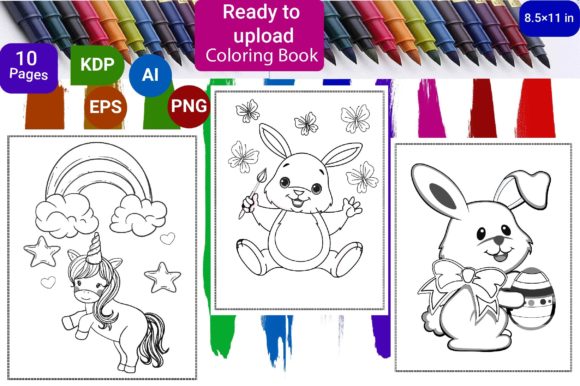
Thematic coloring books remain a staple in the KDP marketplace, but general categories are often oversaturated. Success lies in specificity. A Coloring Book Sailboat KDP Interior targets a passionate subset of enthusiasts who appreciate nautical aesthetics, sailing history, and oceanic tranquility. Unlike generic mandala books, sailboat themes offer educational and nostalgic value that appeals to both adults seeking stress relief and children learning about maritime vessels.
When developing this type of interior, the quality of line art is paramount. Because these books are intended for coloring, the lines must be crisp and consistent. Using vector-based source files like EPS or AI allows designers to adjust stroke weights effortlessly. If a line appears too faint during the proofing stage, it can be thickened globally without pixelation. This level of control is impossible with rasterized images alone. Furthermore, sailboat illustrations benefit from accurate rigging and hull details. Enthusiasts will notice if a sloop is mislabeled as a ketch, so utilizing high-quality, editable vectors ensures accuracy while maintaining artistic flair.
Optimizing Illustrations for Print
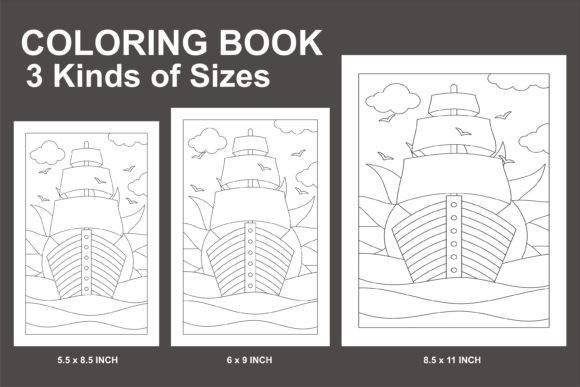
For a Coloring Book Sailboat KDP Interior, resolution and contrast are non-negotiable. While digital screens display colors vibrantly, standard KDP printing uses black-and-white ink on cream or white paper. Designs must be tested in grayscale to ensure they do not look muddy when printed. Vector formats provide the advantage of infinite scalability, meaning the same sailboat illustration can be used on a 6x9 inch page or scaled up for an 8.5x11 inch format without losing edge definition.
- Line Weight Consistency: Ensure all outlines share a similar thickness to create a cohesive user experience.
- Bleed Considerations: Decide early whether images will extend to the page edge. "No Bleed" interiors require a safe margin of at least 0.375 inches on the outer edge.
- Paper Type Awareness: Design with the understanding that KDP paper is relatively thin. Avoid heavy shading or solid black fills that might cause bleed-through.
Mastering Graph Paper Specifications Across Trim Sizes
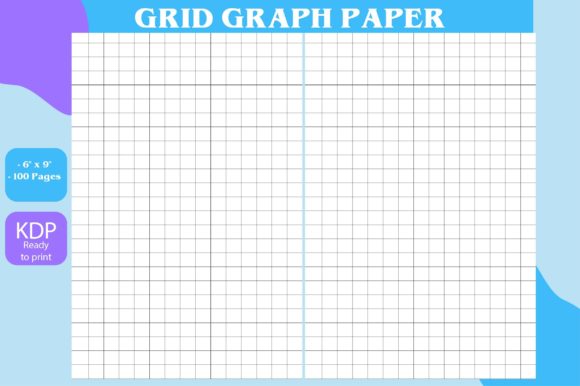
While coloring books rely on artistic expression, graph paper notebooks serve a purely functional purpose. However, functionality does not imply simplicity. The demand for graph paper spans students, engineers, architects, and planners, each requiring specific grid densities and page dimensions. Offering a comprehensive range including 5.5 x 8.5 INCH GRAPH PAPER, 6 x 9 INCH GRAPH PAPER, and 8.5 x 11 INCH GRAPH PAPER allows publishers to capture multiple segments of this utility market.
The 5.5 x 8.5 inch size, often referred to as digest size, has gained immense popularity for field notes and portable journaling. It fits comfortably in back pockets and small bags, making it ideal for on-the-go sketching or quick data logging. Conversely, the traditional 8.5 x 11 inch format remains the gold standard for academic coursework and technical drafting. The 6 x 9 inch size bridges the gap, offering a balance of portability and writing space that suits daily planners and bullet journals.
Grid Precision and File Formats
Creating graph paper interiors requires mathematical precision. A grid that is slightly off-center or unevenly spaced renders the notebook useless for technical work. This is where native design files like CDR (CorelDRAW) and AI (Adobe Illustrator) become indispensable. Unlike pre-made PDFs, source files allow you to adjust grid spacing—such as switching from 4 squares per inch to 5 squares per inch—in seconds.
Having access to EPS and JPG versions adds flexibility to the workflow. EPS files maintain vector integrity for printing, ensuring lines remain razor-sharp regardless of zoom level. JPGs, while raster-based, are useful for creating mockups, marketing materials, or thumbnail previews for the KDP listing. When preparing KDP Interior Blank Notes with grids, always verify the margins against KDP’s current specifications. Graph paper typically requires wider inner margins (gutter) to prevent the grid from disappearing into the binding, especially in thicker notebooks exceeding 100 pages.
The Strategic Value of Multi-Format Asset Libraries
Professional KDP publishers understand that time is the most valuable resource. Maintaining a library of interiors in JPG, EPS, AI, and CDR formats streamlines production and future-proofs your business. Technology changes, and platform requirements evolve. Relying solely on flattened PDFs locks you into a static state. If Amazon updates their bleed requirements or if you wish to repurpose a sailboat design for a calendar instead of a coloring book, editable source files make the transition seamless.
Furthermore, multi-format compatibility supports cross-platform workflows. A designer might prefer Adobe Illustrator for creating the initial Coloring Book Sailboat KDP Interior, but a collaborator or virtual assistant might use CorelDRAW for layout adjustments. Providing CDR and AI files eliminates friction in team environments. Similarly, having high-resolution JPGs allows for immediate use in social media promotion or Etsy listings without needing to export from complex design software repeatedly.
Practical Considerations for No-Bleed Interiors
Choosing a "No Bleed" setup for both coloring books and graph paper simplifies the publishing process and reduces printing errors. Bleed interiors require precise trimming and larger file dimensions, which can lead to rejection if margins are miscalculated by even a fraction of a millimeter. No-bleed interiors, contained entirely within the safe zone, offer a higher margin of safety for new publishers.
For graph paper specifically, no-bleed designs often look more intentional and professional. A clean border around the grid frames the content and provides space for hole-punching or binding without compromising the usable area. In a Coloring Book Sailboat KDP Interior, a no-bleed layout creates a natural frame for the artwork, focusing the colorist’s attention on the central image. This design choice also accommodates users who prefer to cut out and display their finished coloring pages, as the border prevents important details from being lost during trimming.
Aligning Product Design with User Intent
Ultimately, the success of any KDP interior depends on how well it serves the end user. For the sailor or maritime enthusiast, the value lies in the authenticity and relaxation provided by the illustrations. They are not looking for generic clip art; they want recognizable vessel types and serene compositions. For the student or professional using 6 x 9 INCH GRAPH PAPER, value is defined by usability. Is the grid dark enough to see but light enough to write over? Is the paper size appropriate for their binder or bag?
Publishers should conduct regular audits of their interiors against customer feedback. Reviews often highlight specific pain points, such as grids being too faint or coloring book lines being too thin. Because you possess editable AI and EPS files, addressing these concerns is straightforward. You can update the master file and republish, turning negative feedback into an improved product. This iterative approach, supported by versatile file formats and a deep understanding of niche requirements, distinguishes sustainable KDP businesses from those that merely upload and forget.
Whether expanding a portfolio with nautical themes or refining utility notebook offerings, the integration of proper technical specifications with genuine user empathy creates products that stand out. By leveraging the flexibility of multi-format source files and respecting the unique demands of each trim size, publishers can deliver exceptional value across the spectrum of low and medium-content books.