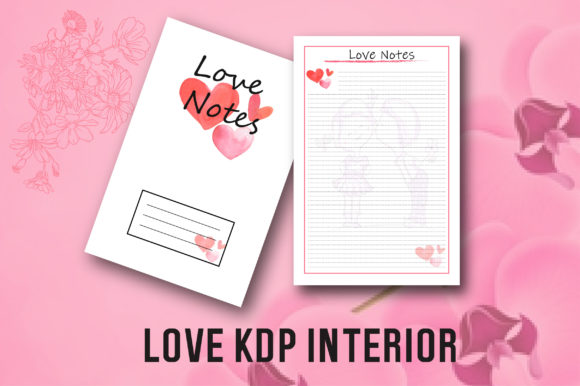
Evaluating the Love Notes KDP Interior Graphic for Low-Content Publishing
For publishers operating within the low-content or no-content niche on Amazon, selecting the right interior template is often more critical than cover design. While covers drive clicks, the interior dictates reviews and repeat customers. The Love Notes KDP Interior Graphic represents a specific category of pre-formatted assets designed to streamline production while maintaining aesthetic quality. Understanding its technical specifications, market fit, and limitations compared to custom or alternative solutions is essential for making an informed purchasing decision.
This resource typically arrives as a 150-page PDF file formatted specifically for a 6″ x 9″ trim size with no bleed settings. These parameters are not arbitrary; they align with some of the most profitable dimensions in the gift book and journaling categories. However, a pre-made asset is only as valuable as its alignment with your specific publishing strategy. Evaluating this graphic requires looking beyond the convenience factor to assess long-term viability, customization potential, and audience reception.
Technical Specifications and Platform Compliance
The primary value proposition of any KDP interior is immediate compliance with Amazon’s printing standards. The Love Notes KDP Interior Graphic is marketed as "formatted and tested," which addresses one of the most significant friction points for new publishers: margin errors and bleed rejections. A 6″ x 9″ trim size with no bleed is a conservative but highly versatile choice. It allows for standard white margins that accommodate various binding thicknesses without risking text or graphics being trimmed off during manufacturing.
When comparing this to DIY formatting, the distinction lies in risk mitigation. Creating a 150-page document from scratch using tools like Canva, InDesign, or Affinity Publisher requires manual verification of safe zones, gutter margins, and resolution consistency across every page. Even minor shifts can trigger automated rejection flags. A pre-tested PDF eliminates this variable. However, this safety comes with rigidity. Because the file is a flattened PDF rather than an editable source file, you cannot adjust margins if you later decide to switch to a different paper type or add content that requires wider gutters.
Publishers must also verify resolution independently. While described as ready for print, best practices dictate downloading the sample or full file and checking it at 100% zoom before uploading. Graphics intended for screen viewing often appear pixelated when printed at 300 DPI. Ensuring the Love Notes KDP Interior Graphic maintains crisp lines and consistent opacity at physical scale is a necessary due diligence step that separates professional listings from amateur ones.
Comparing Pre-Made Assets Versus Custom Design
The decision to use the Love Notes KDP Interior Graphic versus creating a custom interior involves weighing time investment against uniqueness. Custom interiors offer complete intellectual property ownership and distinctiveness. You control every element, ensuring no other seller has the exact same product. This is crucial for building a recognizable brand in saturated niches. However, custom design requires either advanced skills or the budget to hire freelancers, alongside dozens of hours of formatting and testing.
In contrast, the Love Notes KDP Interior Graphic offers speed and cost-efficiency. For publishers managing large portfolios or testing multiple sub-niches, this efficiency is paramount. It allows for rapid deployment, enabling sellers to validate market demand before investing in bespoke designs. The tradeoff is saturation risk. If hundreds of sellers purchase the same license, the marketplace becomes flooded with identical interiors. Amazon’s algorithms may eventually suppress duplicate content, or customers may leave negative reviews noting the lack of originality.
A balanced approach often involves hybridization. Some publishers use pre-made graphics as a base layer, adding unique introductory pages, proprietary quotes, or custom branding elements to differentiate the final product. Since this specific asset is a PDF, overlaying additional content requires PDF editing software. Publishers should assess whether their current tech stack supports this level of modification before purchasing. If you cannot alter the file beyond basic upload, you are accepting the saturation risk as a fixed cost of doing business.
Evaluating Niche Fit and Audience Alignment
"Love notes" is a broad descriptor that encompasses several distinct sub-markets. Determining whether this specific graphic fits your target demographic requires analyzing the visual style and layout density. Is the typography modern and minimalist, or ornate and vintage? Does the layout provide ample writing space, or is it primarily decorative? These factors determine suitability for different user intents.
- Couples’ Journals: Require interactive prompts, shared spaces, and durable layouts. If the graphic is purely decorative without functional writing areas, it may fail as a relationship tool.
- Anniversary Gifts: Prioritize aesthetic beauty and sentimentality over utility. High-quality illustrations and elegant spacing matter more than line count.
- Self-Love/Wellness: Need affirmations, reflection prompts, and calming visuals. Generic romantic imagery may feel misaligned for this growing segment.
- Wedding Planning: Requires organizational structures, checklists, and timeline trackers. Purely emotional content lacks practical application here.
Comparing this asset against niche-specific alternatives reveals gaps. A general "love notes" template might work adequately for Valentine’s Day seasonality but could underperform evergreen wellness searches. Conversely, highly specialized templates might limit seasonal spikes. Reviewers in the 20–50 age demographic are particularly sensitive to authenticity; they can distinguish between genuine utility and generic filler. Before committing, cross-reference the graphic’s aesthetic with top-selling books in your intended sub-category to ensure visual parity.
Strategic Considerations for Portfolio Integration
Integrating the Love Notes KDP Interior Graphic into an existing publishing business requires strategic positioning. It should not be treated as a standalone solution but as one component of a diversified catalog. Publishers with established brands should consider how this asset complements or conflicts with their current offerings. Does it fill a gap in price point? Does it serve a new audience segment without alienating core followers?
Licensing terms are another critical evaluation metric. Not all pre-made interiors grant the same rights. Some licenses restrict the number of copies sold, prohibit use in bundles, or require attribution. Others may forbid using the asset in paid advertising or modified forms. Failing to understand these constraints can lead to account suspensions or legal issues. Always read the license agreement associated with the Love Notes KDP Interior Graphic before purchase. Compare these terms against your business model; if you plan to run aggressive ads or create derivative works, restrictive licenses become dealbreakers regardless of design quality.
Seasonality also plays a role. Love-themed interiors naturally peak around February, May (Mother’s Day), and wedding seasons. Relying solely on this asset creates revenue volatility. Successful publishers pair seasonal assets with evergreen alternatives to maintain cash flow year-round. Evaluate whether this graphic serves as a seasonal supplement or a foundational product. If it is the latter, ensure the design transcends specific holidays to remain relevant in November or January.
Assessing Value Beyond Price Point
Cost is rarely the sole determinant of value in digital assets. A cheaper template that requires extensive reformatting or generates returns costs more in the long run than a premium, truly print-ready file. When evaluating the Love Notes KDP Interior Graphic, calculate the total cost of ownership including potential editing time, marketing differentiation efforts, and opportunity cost of delayed launches.
Customer feedback loops provide ongoing validation. After publishing, monitor reviews specifically mentioning interior quality. Comments about "blurry images," "too much white space," or "repetitive designs" signal mismatches between expectation and reality. Use this data to inform future purchases. If this asset performs well, similar styles may warrant exploration. If it underperforms despite good traffic, the issue may lie in format-market fit rather than execution.
Ultimately, the Love Notes KDP Interior Graphic is a tool, not a guarantee. Its effectiveness depends entirely on the publisher’s ability to match technical specs with audience needs, navigate licensing responsibly, and differentiate sufficiently in a competitive landscape. By approaching selection with analytical rigor rather than impulse, publishers can leverage pre-made assets as accelerants rather than crutches, building sustainable businesses grounded in quality and market awareness.