Lowercase Faux Calligraphy Worksheets: Mastering Hand Lettering for Print and Digital
The aesthetic of hand-lettered calligraphy has become a cornerstone of modern visual communication, appearing everywhere from wedding invitations and boutique packaging to social media graphics and digital planners. However, traditional dip pen calligraphy requires years of muscle memory development, specialized nibs, ink management, and a steep learning curve that often discourages beginners. This is where the concept of faux calligraphy bridges the gap between aspiration and execution. Lowercase Faux Calligraphy Worksheets provide a structured, accessible pathway to achieving the elegant look of brush script using standard writing tools or digital styluses. By focusing specifically on lowercase forms—the building blocks of readable text—these resources allow creators, entrepreneurs, and hobbyists to integrate bespoke typography into their workflows without the immediate pressure of mastering complex flourishes or capital letter structures.
Faux calligraphy is essentially an illustration technique that mimics the thick-and-thin stroke variation of traditional calligraphy by drawing outlines and filling them in. While the concept is simple, executing it with consistent spacing, baseline alignment, and letterform proportion requires deliberate practice. The relevance of dedicated practice sheets lies in this repetition. For professionals aged 20 to 50 who need to produce custom lettering for client work or personal branding, these worksheets serve as both a training ground and a practical reference library. They transform an abstract artistic skill into a tangible, repeatable process that fits into busy schedules and diverse creative environments.
The Evolution of Analog Skills in Digital Workflows
Creative habits have shifted dramatically with the ubiquity of tablets and stylus-based applications like Procreate. We are currently witnessing a hybridization of analog fundamentals and digital convenience. Modern creators rarely stick to one medium exclusively; they expect resources that travel seamlessly between physical paper and glass screens. The demand for versatile file formats reflects this lifestyle shift. A static PDF is no longer sufficient for a generation of artists who might sketch on paper during a commute but refine designs on an iPad at a studio desk.
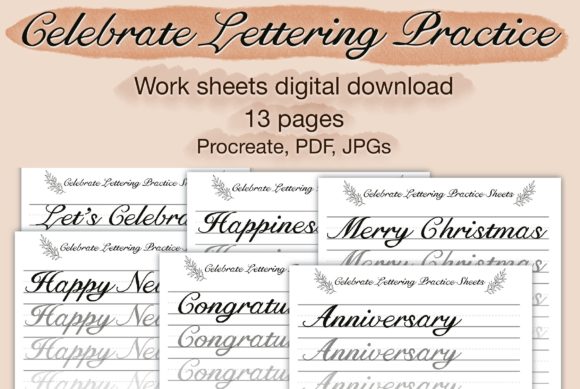
This evolution explains why comprehensive lettering resources now include both printable and digital-native assets. When utilizing Faux Calligraphy Hand Lettering Practice Worksheets, users are not just learning to draw letters; they are learning to navigate cross-platform creativity. The ability to download files directly to an iPad and import them into Procreate allows for non-destructive editing, layer management, and infinite undo options that paper cannot offer. Conversely, printing 8.5 x 11 sheets at home maintains the tactile feedback necessary for developing fine motor control. This dual-format approach acknowledges that while technology accelerates production, the foundational understanding of letterforms remains rooted in physical gesture and spatial awareness.
Why Lowercase Mastery Precedes Flourishes
A common pitfall for self-taught lettering artists is prioritizing elaborate capitals and decorative swashes over fundamental lowercase consistency. In professional typography and legible hand lettering, lowercase characters constitute approximately 95% of written content. If the lowercase alphabet lacks rhythm, proper x-height, and uniform slant, even the most ornate capital letters will fail to create a cohesive design. Easily learn faux calligraphy with this beautiful lowercase alphabet focuses attention where it matters most: on the structural integrity of everyday language.
Practicing lowercase forms trains the eye to recognize negative space and internal consistency. It forces the artist to slow down and analyze the anatomy of each letter rather than relying on momentum. For marketers and business owners creating custom logos or signage, this discipline ensures that the final product is readable at small sizes and reproducible across various media. The traceable nature of these guides provides immediate feedback loops, allowing learners to compare their freehand attempts against a standardized model. This methodical deconstruction of the alphabet builds a mental library of shapes that eventually leads to confident, unguided freestyle lettering.
Practical Applications for Creators and Professionals
The utility of mastering faux calligraphy extends far beyond artistic satisfaction. For freelancers and small business owners, possessing hand-lettering skills reduces dependency on external designers for minor assets and adds a premium, personalized touch to deliverables. Consider the following practical scenarios where these skills translate directly to value:
- Brand Identity Development: Custom wordmarks created via faux calligraphy avoid the licensing restrictions of commercial fonts, ensuring unique brand ownership.
- Social Media Content Creation: Hand-lettered quotes and headlines generate higher engagement rates than standard text overlays due to their organic, human-centric aesthetic.
- Product Packaging and Labeling: Small batch producers can prototype label designs by hand before committing to expensive print runs, maintaining an artisanal feel.
- Educational Materials: Teachers and educators can create customized worksheets, certificates, and classroom decor that feels more personal and engaging than typed documents.
- Digital Product Design: Planners, journals, and sticker sets rely heavily on hand-lettered elements to differentiate themselves in saturated marketplaces.
In each of these contexts, the Lowercase Alphabet Traceable guides act as a quality assurance tool. They ensure that when a creator sits down to execute a project, they have a reliable foundation to build upon, reducing the time spent correcting proportional errors and increasing overall efficiency.
Maximizing Value Through Versatile Formats
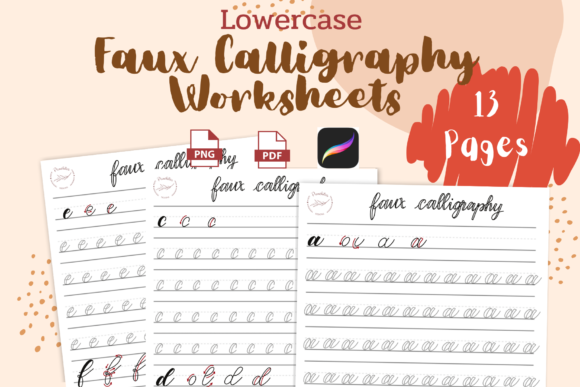
When investing in educational creative assets, the return on investment is measured by usability and longevity. This specific collection offers 13 sheets of practicing material, providing substantial content for extended skill development rather than a superficial overview. The 8.5 x 11 size is optimized for standard home printers, eliminating the need for professional printing services or tiling adjustments. This accessibility lowers the barrier to entry for consistent practice.
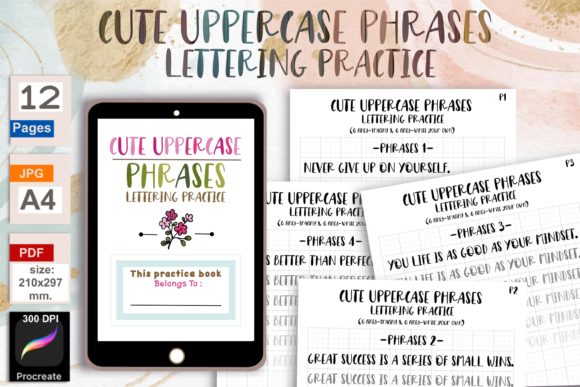
For the digital practitioner, the inclusion of JPG and PDF files specifically formatted for iPad integration is crucial. Importing these worksheets into Procreate as a background reference layer allows users to practice directly on top of the guides using digital brushes. This method preserves the original worksheet for unlimited reuse, making it a sustainable resource. Users can adjust opacity, change blend modes, or isolate specific letters to focus on problem areas. This flexibility supports different learning styles; some users prefer the friction of paper, while others thrive in the fluid environment of digital canvas. Providing both options respects the user's individual workflow preferences and technological setup.
Establishing Realistic Expectations and Support
While digital downloads offer instant gratification, skill acquisition remains a gradual process. It is important to approach these Procreate Lettering Worksheets and printable guides with patience. Faux calligraphy requires retraining the hand to move differently than it does during standard cursive writing. Early attempts may feel stiff or uneven, which is a natural part of the neuromuscular adaptation phase. Consistency with the provided traceable sheets is more effective than sporadic bursts of intense practice.
Furthermore, understanding the terms of digital products helps manage expectations and ensures a smooth experience. As with most personalized or downloadable creative assets, returns, exchanges, or cancellations are generally not accepted once the files have been accessed. This policy protects the intellectual property of the creator while acknowledging the instantaneous nature of digital delivery. However, reputable sellers prioritize customer satisfaction. If technical issues arise during download, file corruption occurs, or formatting problems prevent proper use, direct communication is encouraged. Most creators are willing to resolve legitimate technical hurdles to ensure their iPad Practice materials function as intended.
Integrating Practice Into a Sustainable Creative Routine
The ultimate goal of using these worksheets is to reach a point of independence where guides are no longer necessary. To achieve this, consider integrating short, focused practice sessions into existing routines rather than carving out large blocks of time. Fifteen minutes of tracing lowercase forms while listening to a podcast or waiting for coffee can yield significant cumulative progress over weeks. The portability of digital files makes this micro-practice feasible for busy professionals and parents.
As proficiency grows, users should transition from pure tracing to copying, and finally to freehand creation using the worksheets only as occasional checkpoints. Documenting this progression can also serve as portfolio content or social media documentation, showcasing the journey from novice to competent letterer. This transparency resonates with audiences and reinforces the creator’s own commitment to improvement. By treating Lowercase Faux Calligraphy Worksheets not as a one-time purchase but as a recurring component of a broader creative discipline, users extract maximum value and develop a sustainable, lifelong skill set that enhances both their professional output and personal expression.